Surgical Abortion - What You Need To Know
We have heard the heartache of women who have experienced surgical abortion and vowed never again. Most had no idea what they were signing up for and felt deep pain and regret. What were they not told about surgical abortion? That is the topic of this week's discussion.
First Trimester surgical abortions are conducted from 4 -14 weeks via Suction/Aspiration Abortion.
For very early pregnancies (4-7 weeks LMP), after local anesthesia, a long, thin tube is inserted into the uterus and the baby is suctioned out. Later in the first trimester, the cervix needs to be opened wider because the fetus is larger. The cervix may be softened the day before using medication placed in the vagina or it may be slowly stretched open using “laminaria” - dried seaweed formed into bundles that absorb fluid and expand in size when placed inside the cervical canal causing it to dilate. It is a painful process.
Then, the cervix may be further stretched using dilating rods. General anesthesia will be used if available. Some women do this without pain medication.
Next, the abortionist inserts a plastic tube into the uterus and applies suction by a vacuum device. This pulls the baby’s body apart and out of the uterus. A sharp looped tool, called a curette, may be used to remove remaining fetal parts.
Serious complications include bleeding, infection, incomplete abortion, allergic reactions to medications and organ damage such as uterine perforation.
Second and Third trimester abortions arecalled Dilation and Evacuation (D&E). The D&E procedure performed from 15 to 22 weeks is the most common second trimester abortion. Some operators use lethal injections to end the baby’s life a few days before the procedure. This allows the bones to soften, easing removal. The cervix is opened wider than the first trimester because the baby is larger via vaginal medications placed in the cervix for several days before.
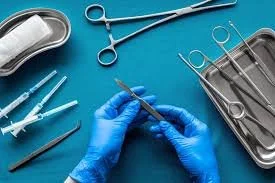
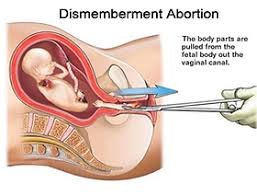
The amniotic fluid is drained. Metal dilating rods further stretch the cervix. Forceps are used to grasp, tear, and pull fetal parts through the opened cervix as the baby is too large to fit through the suction tubing in one piece and the bones will not break up with suction alone. The removed parts are kept track of to ensure nothing is left behind - like pieces of a puzzle put back together. Lastly, the curette or suction machine is used to clear remaining tissue or blood clots which can cause infection and bleeding.
The D&E procedure performed after viability (from 23 weeks on) is associated with increased risk to the life and health of the mother. Because live birth is still possible, injections are given to cause fetal deathto comply with the federal Partial-Birth abortion ban of 2003. Medications are injected into the amniotic fluid, the umbilical cord, or directly into the baby’s heart or head, causing death. The remainder of the procedure is the same as the second trimester D&E.
An alternate procedure, called “Intact D&E” is also used. The goal is to remove the baby in one piece, thus reducing the risk of leaving parts behind or causing damage to her body. This procedure requires the cervix to be opened wider, however, it is still often necessary to crush the fetus’ skull for removal.
Late Term Abortion - Labor and induction induces abortion by using drugs such as misoprostol or pitocin to cause labor and delivery. Today most are done in an outpatient setting, despite considerable risks. The same medications are injected into the baby to avoid delivery of a live baby and the cervix is dilated. Next labor is induced. In most cases, the baby and placenta are delivered. The patient MAY receive pain medications. Occasionally, a D&C is needed. Potential complications include hemorrhage and the need for a blood transfusion, and possible uterine rupture.
It is important to note that babies experience pain as early as 15 weeks. There are graphic videos of the fetus trying to get away from the abortionist needle and surgical tools. It is cruel and horrific.
Short term risks
Serious immediate physical complications occur infrequently in early abortions, but increase with each week of pregnancy.
Heavy bleeding from cervical tears, uterine punctures, retained tissue, or when the uterus fails to contract.
Incomplete abortion where the abortion fails to suction out the embryo and the pregnancy continues.
Infection can develop, requiring antibiotics and D&C. Pelvic infection can lead to infertility and increased risk of ectopic pregnancy.
The cervix, uterus, bowel, or bladder damage.
Clots may form, break off and travel in the body, causing illness and even death.
Anesthesia can cause allergic reactions of varying degrees of severity.
Rh Sensitization. All pregnant women who are Rh negative, even in the case of abortion, should receive Rhogam medication to prevent the formation of antibodies that may harm future pregnancies.
The risk of death increases by 38% for each week after 8 weeks LMP. For pregnancies over 21 weeks, the risk from induced abortion is 12 in 100,000.
Long Term Risks
Long term physical risks include an increase in breast cancer and pre-term birth in the future. However, abortion can have serious emotional, relational, and spiritual side effects.. They are documented. We have heard many many stories from women who have had abortions and experienced symptoms similar to PTSD - nightmares, flashbacks, depression, anger and avoidance of certain places. Post Abortion Syndrome (PAS) is real. And it impacts relationships, especially if the abortion was under duress
If you or someone you know is considering an abortion, the decision needs to be an informed one. Talk to a center like ours where you can get the support of people who care for you and your baby. At a minimum, we want to provide a decision guide. We don’t want you to make life altering decisions out of a sense of vulnerability and fear. You are stronger and more capable than the abortion industry wants you to believe. They don’t care about you.
A Decision Guide
There is much to consider before you make your decision and that is where we can help. Again - the abortion industry does not care about you and your health. Regardless of your decision you should consider the following:
Have you had an ultrasound to confirm how far along the pregnancy is and determine which abortion procedure is safest for you?
Have you been tested for an STI? Do you know the additional risks of the procedure if you have an STI?
Do you understand the process and risks of the procedure?
Have you asked the clinic what happens in case something goes wrong with the procedure?
Have you asked the clinic if their provider (if a doctor or not) has hospital privileges in case of complications that would require medical intervention?
Are you aware of the possible emotional side effects of abortion and where to get help if those arise? Again, we will cover Post Abortion Syndrome in more detail in another episode.
Do you know if it is OK for you to change your mind and to withdraw your consent at any time before the procedure even if you are on the table?
And on that note, do you know you can change your mind even if you started the abortion pill process? We will also cover information on Abortion Pill Reversal in another episode.
Is the environment safe and sanitary? If your gut tells you it is not right, listen.
Have you been provided alternative options, such as adoption or resources for help in parenting?
Again - we believe abortion takes an innocent life and is wrong, except in cases where the pregnancy is unavoidably ended in the attempt to save the mother’s life. However, you should never feel pressured to make a quick decision. You have time to make an informed choice. Mark off each of these items to ensure you have explored all the information to make this important health decision. If you are unsure of any of these questions or answers, please contact us. Pregnancy Centers like ours are free of charge and have no monetary incentive. This means that we put your well-being first in whatever it is you ultimately choose.