Is the Abortion Pill Safe?
According to the Guttmacher Institute, the research and policy arm of the abortion industry, 63% of all abortions are now induced via the abortion pill. The Department of Health and Human Services is reviewing the use of mifepristone, RU 486, based on research by the Ethics and Public Policy Center into the safety of the drug.
There is the case of Candi Miller, a 41 yo Georgia woman who bought the abortion pills online, without a doctor’s oversight, took them at home, and later died writhing in pain in front of her teenage son and 3 year old daughter after an incomplete abortion caused sepsis. She had underlying health issues that were not addressed and that contributed to her death. But she wasn’t under the care of a doctor so no one did a health history assessment.
There is also a case in the UK. Nicola Parker took the first pill but it did not work. After taking the second pill, she delivered her baby in the toilet and saw that its heart was still beating. She held her dying child in her hand until it passed. She says she thought she was less than 10 weeks pregnant, but did not receive an ultrasound to confirm her date.
So let’s start with the History of the Abortion Pill
The RU-486 abortion pill was developed by Étienne-Émile Baulieu, known as the “Father of the Abortion Pill.” Born as Etienne Blum in 1926 In Strasbourg Germany, he was a Jew who escaped the Holocaust and joined the French Resistance during WW11. This is notable and darkly ironic: this invention - by a Jew who escaped death in the Holocaust - has killed millions of unborn children for no other reason than they were considered unwanted. To make the pill more acceptable to the public, Baulieu marketed the drug by the euphemism “the unpregnancy pill”. Although that should not be surprising as today you will find the abortion pills marketed as “missed period pills” as if their intended purpose is to help the woman restart her period.
The RU486 drug works by blocking the hormone progesterone. The lack of progesterone causes the thinning of the uterine lining, causing the embryo to detach and die. After that, the woman is given another medication, Misoprostol, which induces labor, causing the expulsion of the fetal remains, generally in the toilet of the woman's bathroom. RU-486, or mifepristone as it is widely referred to now, has only been available in the United States since 2000. This approval was based on studies that cite minimal data. But after the results of these studies, the original FDA-approval had several modest safeguards for women’s health: It required 3 office visits and could only be prescribed by a physician in a clinic, medical office or hospital where a woman’s medical history was assessed. The physician had to be able to assess the gestational age of the embryo and rule out ectopic pregnancy. The physician had to be able to surgically intervene in cases of incomplete abortion, heavy bleeding, infection, and severe allergic reactions. They had to be able to assure access to medical facilities equipped for transfusions and resuscitation if needed.
What is the progression of the FDA approval?
Since then the FDA has systematically dismantled any safeguards that were in place to prevent women from being harmed by the drugs. In 2016, the FDA expanded the use of the mifepristone/misoprostol regimen from 49 days to up to 70 days of pregnancy. The certification requirement was broadened from being not just limited to physicians but to include other advanced practice clinicians.
In December 2021, the FDA removed the in-person dispensing requirement for mifepristone and expanded the distribution to include certified pharmacies. On January 3, 2023, the FDA allowed pharmacies to dispense mifepristone directly to patients . Online mail order pills were also made available via dozens of sites at a cost of anywhere from $200-$400, with minimal or no oversight.
At this time, 18 states require that medication abortion be provided by a physician. And of these 18, only 5 require the patient to have an in-person visit with a physician. Only 4 states banned mailing pills directly to patients.
The label of the abortion pills states that “less than .5 percent” of women experience serious complications after taking the pills. However, according to the Ethics and Public Policy Institute study published this year, 10.93 percent of women experience sepsis, infection, hemorrhaging, or other serious adverse events within 45 days following a mifepristone abortion. Their findings are based on insurance claims and not on clinical trials. This means that the real-world rate of serious adverse events following mifepristone abortions is at least 22 times higher than reported on the drug label.
Even the the Mayo Clinic states that the abortion pill should be avoided completely by those with the following pre-existing health conditions:
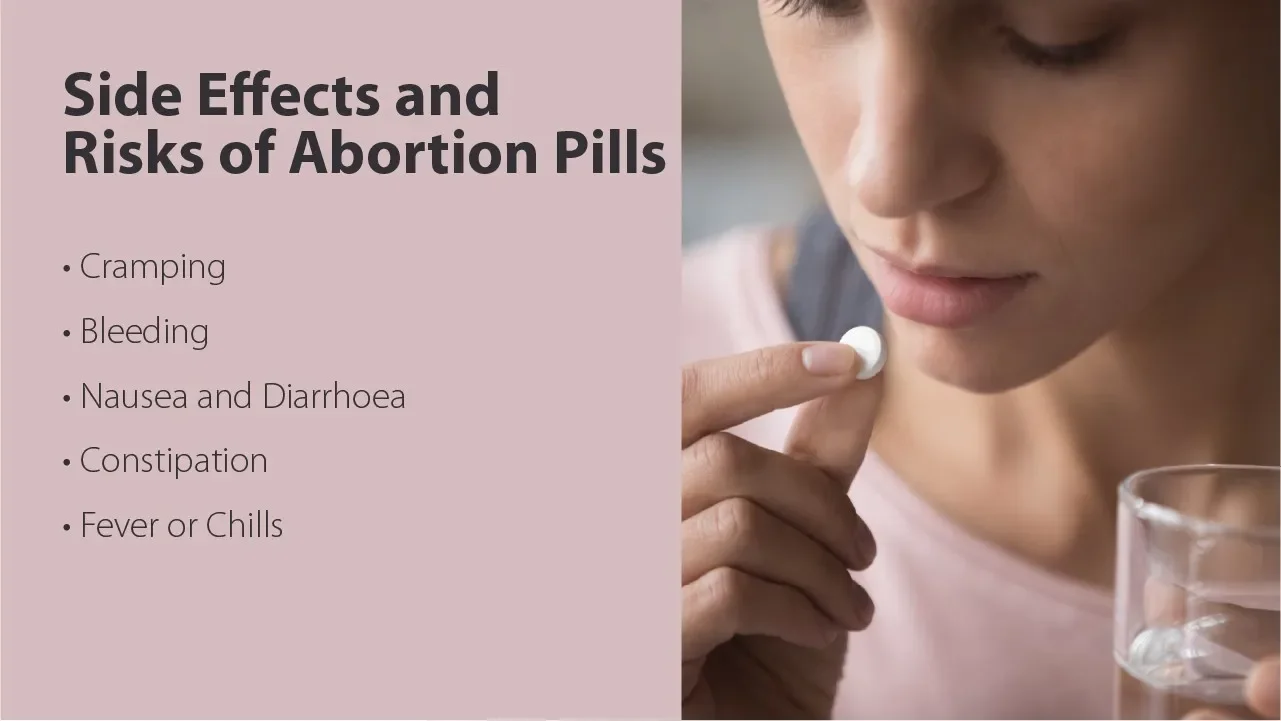
An intrauterine device (IUD)
Allergies to the medications used in the medical abortion
Heart, blood vessel, liver, kidney, or lung diseases
Ectopic pregnancy
Use of blood thinners or steroid medications
Gestational age greater than 10 weeks
How is it abused?
Something many of us who are removed from the world of abortion may not think about is the manner in which this lack of oversight provides incentives for coercion and abuse of the drugs. The Heritage Foundation has been compiling records of such cases that highlight how easy it is for this abuse to go on many times without repercussions. Many have been reported, and prosecuted.
What are some examples?
In 2022, Mason Herring was charged with assaulting a pregnant woman and assault-forced induction after repeatedly slipping an abortion drug into his wife’s beverages to forcibly abort their unborn child, well past the legal limit. She went to the hospital with severe cramping and bleeding. She eventually gave birth to her baby prematurely.
Doctor Sikander Imran, a doctor, was sentenced to three years in prison for fetal homicide. He spiked his girlfriend’s tea with an abortion pill. She was 17 weeks pregnant at the time. This is 7 weeks past the legal limit.
David Coots, a nurse practitioner, was charged with assault, third degree rape, and witness tampering after allegedly forcing a misoprostol pill into a woman’s vagina during sexual intercourse.
Jagmeet Sandhu was sentenced to a year in jail for involuntary manslaughter. He had held his girlfriend at gunpoint after entering her home while she slept and forced her to take abortion pills, killing her child. She was about 12 weeks pregnant at the time.
Ronald Powell, a high school security guard, was accused of sexually abusing a 15-year old student over the course of several years. The student became pregnant. According to court records he posed as her father at Planned Parenthood, where she had a chemical abortion.
You may think that your boyfriend, husband or partner would never do anything like that. Are you sure? Fear and anxiety can encourage all of us to make irrational decisions.